

You don’t need another “cool” idea. You need a real strategy for building a crowdfunding platform that actually gets campaigns funded. One that keeps investors compliant. One that stops your platform from crashing after its first 10 projects. Simple as that.
If you’re a startup founder, fintech PM, or an agency planning to build a crowdfunding platform, this guide is for you. No fluff. Just the things that matter: development process, technical decisions, legal prerequisites, and more that help you build the right platform.
And honestly, the timing is crazy good. Reports say the global crowdfunding market will touch $5.53B by 2030, growing at a wild 17.6% CAGR from 2025–2030. So yeah, it’s big, and it’s getting bigger.
What Are Crowdfunding Platforms and How They Work?
Crowdfunding platforms are simple. A place where ideas meet money without banks breathing down your neck. Think of them as digital hubs where creators, startups, and even small businesses raise funds straight from people who actually care. No complicated loops. Just a clear campaign, a story, and supporters ready to jump in.
Here’s how it works:
A user creates a campaign, and the crowdfunding platform displays it. People browse, pledge, pay. The platform handles all the heavy stuff: KYC, escrow, payout rules, security checks. You don’t see the backend magic, but it’s there, running smoothly.
A strong crowdfunding website or crowdfunding application automates everything so fundraising feels quick and clean. And yes, it helps ideas reach more eyeballs. More trust. More growth. That’s why businesses lean into it because it actually works.
Market Analysis & Overview
- The crowdfunding market kept climbing in 2024. Somewhere around USD 17.7–24 billion. Solid growth. Credible too.
- 2025 is already projected to cross USD 20 billion, running on a CAGR close to 15%. Fast. Predictable. Still surprising.
- Look ahead a bit. 2030–2032 looks wild. Forecasts stretch from USD 38B to even USD 108B. That’s what digital adoption does. Mobile-first behaviour. Instant funding flows.
- North America still leads the game. But Asia-Pacific? It’s catching up way faster than anyone expected. Grand View Research backs that.
- Reward-based and equity-based models stay on top. No mystery there. Better security, stronger KYC, smoother UX. Platforms feel cleaner. Safer. Easier to trust.
Different Types of Crowdfunding Platforms
This section walks you through the different types of crowdfunding platforms that are built today.
- Donation-Based Crowdfunding
On these platforms, people give. They don’t ask for anything back. Simple, emotional, powerful. These platforms fuel medical fundraisers, community projects, NGO campaigns, pretty much anything driven by goodwill. Donation platforms thrive when the UI feels honest, the payment flow feels fast, and trust stays intact. That’s why this format still leads cause-driven crowdfunding today.
Examples: GoFundMe, RocketHub
- Rewards-Based Crowdfunding
Backers want a benefit. A product sample. Early access. Some perk that feels worth it. This is how creators, startups, and D2C brands build hype before launch. Think Kickstarter-level excitement. When you offer a rewards-based platform with clean campaigns and transparent tiers, people end up staying longer because the value feels real, not forced.
Examples: Kickstarter, Indiegogo
- Equity-Based Crowdfunding
Investors put in money and receive equity, actual ownership. High-growth startups love these platforms because they open doors to capital without traditional VCs blocking the way. But it demands tight compliance, identity checks, and secure investor dashboards.
Examples: Republic, Fundable
- Debt-Based Crowdfunding
Peer-to-peer lending. Borrowers take money. They pay back with interest. Straight. Predictable. But it needs strong risk checks, automated lending workflows, and transparent repayment tracking. If your debt crowdfunding platform lacks trust or clarity, people leave fast. No second chances here.
Examples: Funding Circle, LendingClub
- Hybrid Crowdfunding
This one bends the rules a bit. Mix rewards with equity. Blend debt with rewards. Whatever fits your users’ goals. Hybrid models work because they offer flexibility that founders crave today. Platforms like Fundable show how offering multiple models boosts conversions. If your audience wants options, hybrid crowdfunding platforms give them, without making them jump platforms.
Examples: Fundable, Indiegogo
Advantages of Developing a Crowdfunding Platform
Before you build a crowdfunding platform, you need to know why people even choose them now. And honestly, the reasons are solid.
- Access to Capital: Startups want money fast. No banking drama. No long approvals. Crowdfunding gives them quick capital through simple, mobile-friendly campaigns. People fund what they like. That’s it.
- Market Validation: You launch a campaign, and boom, truth hits. Does the market want your idea or not? Real-time feedback received from campaigns helps creators improve their product, avoiding waste of time and money.
- Marketing & Visibility: Crowdfunding is free marketing. Social shares, platform boosts, and community hype all build buzz without trying too hard. Brands get visibility from day one.
- Community & Early Supporters: A campaign doesn’t just collect funds. It collects people. Loyal ones. Early adopters who test, talk, support, and stay. They turn into long-term advocates without being asked twice.
- Keep Your Equity: Many crowdfunding models don’t ask founders to give up ownership. Raise funds. Keep control. Make decisions your way. Simple.
- A Global Pool of Backers: Crowdfunding opens doors to basically everyone. Different countries. Different motivations. Small and big contributors. That diversity boosts the chances of your project actually taking off.
Top Features to Look for in a Crowdfunding Platform
A successful crowdfunding platform is not about one or more flashy features, but about dozens of small calls made right. Tiny choices that cut confusion, flows that just make sense, and no second-guessing.
Here is a list of features you must integrate while developing a crowdfunding platform:
Core Platform Features:
- User-Friendly Interface: A clean interface matters. People should know where to click, instantly. No learning curve, and no second-guessing. Just a few drop-offs, and more launches.
- Secure Payment Processing: Payments must feel safe, always. Embrace the benefits of encrypted flows and trusted gateways. Users shouldn’t think about security. They should just pay. And move on.
- Flexible Funding Models: Not every campaign works the same. Some need all-or-nothing, and some don’t. Flexible funding models let creators choose what fits, and not what’s forced.
- Customer Support: Support still matters. A lot. Fast replies and clear answers.
Because when money is involved, silence kills trust.
Features for Project Creators:
- Tools to Manage Crowdfunding Campaigns: Easy-to-use tools support the rapid launch, management, and updating of crowdfunding campaigns by creators.
- Customizable Campaign Pages: Personalized campaign pages enhance visibility, branding, and user engagement.
- Analytics & Reporting: Through real-time analytics, creators are able to estimate performance and develop effective fundraising strategies.
- Communication Tools: Updates and direct built-in messaging will keep the backers informed through every step of the campaign.
Features for Investors:
- Easy Project Discovery: Smart filters and search facilitate the process of finding crowdfunding projects relevant to investors.
- Transparent Information: Comprehensive details about the project and the breakdown of fund usage will attract investors with confidence in their choices.
- User Profiles & Management: Centralized dashboards allow investors to manage contributions and track activity.
- Community Engagement: Comments and social interactions lead to trust and involvement on the platform.
Step-by-Step Crowdfunding Platform Development Process
Before you build a crowdfunding platform, you need to know what really goes on behind the scenes. Each stage matters. Each step decides whether your idea becomes a stable, scalable, money-making product or just another abandoned concept online.
Here’s the full cycle, broken down simply.
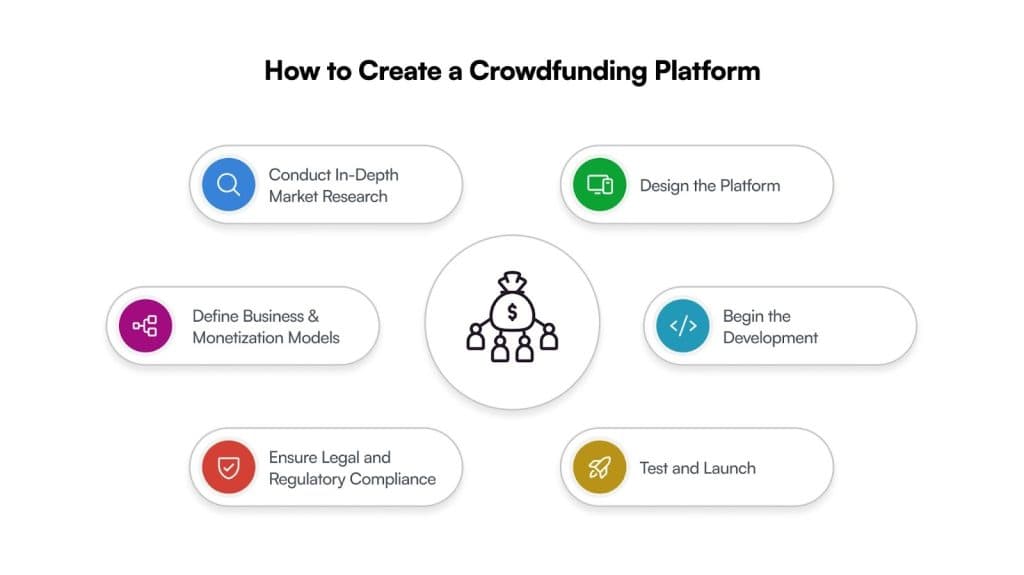
- Conduct Market Research and Define Your Niche
Start with the market. Look at trends, user pain points, campaign categories, who’s struggling, who’s winning.
See where donation, rewards, equity, or hybrid models actually fit. Pick a niche that solves a real gap, not a random “let’s build this” moment. When the niche is clear, adoption feels easier. Market fit gets stronger, too.
- Define Business and Monetization Models
Now talk money. Decide how your crowdfunding platform earns commission, subscriptions, listing fees, payment markup, whatever works.
Define approvals, campaign flow, and payouts. A solid monetization model keeps revenue steady and operations predictable. Basically, you stay profitable from day one instead of guessing later.
- Ensure Legal and Regulatory Compliance
Compliance isn’t optional. Especially for equity or debt crowdfunding, where rules hit harder.
Set up KYC/AML, escrow, financial regulations, taxation, regional licensing, yes, all of it. Doing this early saves you from messy legal trouble. Plus, it builds trust, security, and a clean reputation before big campaigns arrive.
- Design the Platform
Jump into design. Create user flows, simple wireframes, and a prototype that feels smooth. Make sign-up effortless.
Campaign creation is clean. Payments stress-free. People trust platforms that look stable and behave predictably. A good UI/UX cuts drop-offs and pushes more campaign conversions. It’s basically your make-or-break layer.
- Develop the Platform
Time to build. Frontend, backend, dashboards, campaign tools, payment gateways, alerts, strong security, everything.
Choose a scalable architecture. Write clean APIs. Keep the code modular because growth won’t slow down. Add KYC automation, analytics, and responsiveness for all devices. This is where the idea becomes real.
- Test and Launch
Test hard. Test again. Functional, security, load, payments, beta users, everything. Fix bugs fast. Streamline flows.
Make sure nothing breaks under pressure. Then launch with solid onboarding and sharp marketing. Monitor live activity like a hawk. A smooth launch boosts credibility and gets users on your side instantly.
A Comprehensive Technology Stack for Crowdfunding Platform Development
Are you thinking of building a crowdfunding platform? Cool. Start by choosing the right tech stack. It’s the backbone or the foundation of your platform. Choosing the tech stack prudently is essential to building a flexible, secure, and scalable crowdfunding platform. Here are the top technology choices to accomplish your project:
| Category | Technologies/Tools |
| Frontend | React.js, Vue.js, Angular, Next.js |
| Backend | Node.js, Python (Django/Flask), Ruby on Rails, Java Spring Boot |
| Databases | PostgreSQL, MySQL, MongoDB, Firebase |
| Cloud Hosting | AWS, Google Cloud, Microsoft Azure |
| Payment Gateways | Stripe, PayPal, Razorpay, Authorize.Net, MangoPay, Coinbase Commerce |
| Security & Compliance | SSL, OAuth, 2FA, Encryption, KYC/AML Tools |
| Integrations | Mailchimp, SendGrid, Google Analytics, HubSpot, Jira, Mixpanel |
Modern technologies leveraged in crowdfunding platforms are:
- Blockchain Integration
- AI & Machine Learning
- Microservices Architecture
Top 5 Successful Crowdfunding Platforms
Kickstarter
- A space where creative ideas try their luck.
- All-or-nothing campaigns. Risky, but exciting.
- Great for artists, innovators, and early-stage product makers who just want that first push.
GoFundMe
- Pure donations. No rewards.
- People use it for medical bills, emergencies, and sudden community needs.
- Nonprofits jump in, too. Simple, emotional, quick to launch.
Patreon
- Memberships. Subscriptions. Loyal fans pay every month.
- Perfect for creators who don’t want “one big campaign” but a steady income.
- Writers, artists, influencers, they all build tight communities here.
Fundable
- A little more serious. Business-driven.
- Mix of rewards and equity.
- Startups use it when they want structured investments, not just hype money.
Mightycause
- Made for nonprofits from day one.
- Charities run events, donation pages, and long campaigns without juggling ten tools.
- Best for NGOs, community programs, and anyone building long-term donor trust.
Essential Regulations and Standards for Crowdfunding Platforms
Crowdfunding platforms don’t survive on ideas alone. They survive on trust. And trust comes from doing compliance right, from day one. Regulations protect donors, platforms, and fund flows. Miss them, and growth stalls fast. Get them right, and scale feels easier.
- KYC & AML Compliance: Verify users. Track transactions. Prevent fraud early. KYC and AML laws keep fundraising clean and regulators off your back.
- Data Privacy Regulations (GDPR, CCPA): User data is sensitive. Protect it. Clear consent, secure storage, and transparency are not optional anymore.
- Payment & Financial Regulations: Follow PCI-DSS standards. Secure payments. Handle refunds and chargebacks properly, always.
- Securities & Fundraising Laws: Equity or donation-based? Rules differ. Know local and global crowdfunding regulations before launch.
Wrapping Up
Building a crowdfunding platform is not about rushing to launch and fixing things later. That mindset usually fails here. Money is involved. User trust is on the line. And once people face broken flows or shaky security, they don’t come back. Early decisions matter more than speed. They decide if your platform survives past the first few campaigns or slowly disappears.
A scalable crowdfunding platform needs more than a long feature list. It needs an architecture that stays stable when traffic spikes. At Galaxy Weblinks, this isn’t just theory. We’ve built crowdfunding platforms that operate in real conditions, with real users and real pressure.
One solid example is a crowdfunding platform we built for nonprofits and mission-driven teams. The goal was simple. Build trust fast. Keep fund flows visible. Lock down security and compliance. No friction for donors. No confusion for NGOs.
If you want to build a crowdfunding platform that scales and earns confidence, the path is clear. Start with strategy. Bake compliance into the core. Pick tech that grows without breaking. Work with a team that’s done this before.
Clean architecture matters. Cloud setup matters. Performance planning decides everything. High traffic either holds or the platform crashes mid-campaign. Let’s talk. Share your vision. Use our experience to turn it into something real.
FAQs
1. What makes a crowdfunding platform successful?
Clarity. Trust. Smooth flow. When users understand what to do and feel safe doing it, campaigns perform better. Simple UX and secure payments matter more than flashy features.
2. Which features are essential in a crowdfunding platform?
Easy campaign creation. Secure payment gateways. Transparent fund tracking. Flexible funding models. And basic things like fast load time, which people notice when it’s missing.
3. How important is security in crowdfunding platforms?
Critical. Money is involved. One weak link breaks trust fast. Strong encryption, compliance, and fraud protection aren’t optional. They’re expected.
4. Can a crowdfunding platform scale as campaigns grow?
Yes, if it’s built right from day one. Clean architecture, cloud infrastructure, and performance planning decide whether the platform survives high traffic or crashes mid-campaign.
5. How long does it take to build a crowdfunding platform?
It depends on complexity. A basic platform can take a few months. A scalable, compliant, production-ready platform takes longer. Rushing usually costs more later.