


Crypto isn’t fringe anymore. It’s part of how money moves now.
A few years ago, businesses treated cryptocurrency like a risky side bet, interesting, but not essential. That mindset has shifted.
Today, companies across ecommerce, fintech, SaaS, and even retail, are enabling crypto payments because customers are actively asking for it. People want control over their money. They want faster transactions. More transparency. Less dependence on traditional banks.
Even Elon Musk once tweeted: “You can buy a Tesla with Bitcoin.”

And honestly? Businesses see the upside, too. The average revenue per user in the cryptocurrency market is expected to be $98.3 billion in 2026.
But then comes the real question.
What does it actually cost to develop a crypto payment gateway?
Because jumping into development without understanding costs, stretches budgets, timelines slip, and projects quietly stall.
Knowing the development cost helps you prioritize features, choose the right tech stack, and avoid over-engineering something your business doesn’t need (yet). It also makes internal approvals easier, finance teams like clarity, not surprises.
This guide walks you through all of it. Just what actually impacts your budget and why it matters.
By the end, you should be able to look at your business model and say, “Yes, this is the kind of crypto payment gateway we need, and this is what it’ll likely take to build it.”
The Growing Demand for Crypto Payment Gateways
- The Crypto payment gateways market is expected to grow to $6,030 million by 2035. [Source]
- The region of the Asia Pacific is projected to experience the highest CAGR for the Crypto Payment Gateways Market.
- Major platforms are adopting crypto, with over 1.3 million merchants.
What is a Crypto Payment Gateway?
A crypto payment gateway is basically the bridge between your business and the blockchain. It lets you accept cryptocurrency without turning the checkout process into something complicated or intimidating for customers. Smooth experience in the front. While serious technology is working quietly in the background.
It’s also why crypto payment gateway development is suddenly on leadership agendas. Not as an experiment, but as a growth lever.
Businesses want fewer transaction fees. Faster cross-border payments. Access to customers who don’t even use traditional banks anymore. And the ability to sell globally without worrying about currency friction.
But none of this works without a strong infrastructure.
Under the hood, a good gateway blends blockchain connectivity, advanced encryption, fraud controls, and compliance-ready architecture. Miss one layer, and things get risky fast. Payments are not where you cut corners.

How Much Does It Cost to Develop a Crypto Payment Gateway in 2026?
In 2026, the cost to develop a crypto payment gateway usually lands somewhere between $40,000 and $300,000+. Wide range, yes. But it makes sense once you look at what you’re actually building.
Complexity drives cost. Security layers do too. Compliance isn’t cheap either, but skipping it is far more expensive later. And then there’s scalability. Because if your gateway can’t handle growth, you’ll end up rebuilding sooner than you planned, which nobody enjoys.
But remember, you’re not paying for developer hours. Not really. You’re funding the backbone of your payment ecosystem.
Let’s make this easier to visualize:
- Basic Gateway [$40,000 to $80,000]
Best suited for startups or early-stage products testing crypto acceptance. You get the essentials: wallet integration, payment APIs, a merchant dashboard, and foundational security. Nothing excessive, but enough to operate confidently while validating demand.
- Mid-Level Platform [$80,000 to $150,000]
This is where growing companies usually land. Transaction flow becomes predictable, so the system needs more muscle. Expect multi-currency support, automated crypto-to-fiat conversion, or a stronger encryption standard. It’s less about experimenting now and more about operating efficiently.
- Enterprise-Grade Gateway [$150,000 to $300,000+]
Built for serious scale. Fintech firms, marketplaces, and global merchants are businesses that cannot afford payment friction. At this level, you’re looking at advanced fraud detection, cold wallet setups for asset protection, intelligent routing to optimize transaction success rates, deep analytics, and cloud infrastructure. Expensive? Yes. But rebuilding a weak system later costs far more.
One important thing to remember, the “right” app development cost isn’t the lowest one. It’s the one aligned with your transaction volume, risk exposure, and growth trajectory.
Key Factors That Influence Crypto Payment Gateway Development Cost
The crypto payment gateway development cost doesn’t come from one big decision. It builds up. Layer by layer. Mostly shaped by how advanced you want the platform to be, how secure it needs to run, and whether it can scale when transaction volume spikes (because it will, if things go right).
Pricing can swing quite a bit. But these are the factors that actually decide what you’ll end up budgeting, and whether your gateway still makes sense two or three years down the line.
- Feature Complexity
The moment you move beyond basic payment acceptance, the development effort climbs. Multi-currency support, real-time crypto-to-fiat conversion, recurring billing, reporting dashboards, analytics, each one sounds small in isolation. Together, they demand serious engineering.
Here’s where smart teams pause and prioritize. Build what drives revenue first.
- Security Infrastructure
Security is not the place to negotiate with your budget. Really, it isn’t.
Multi-signature wallets. End-to-end encryption. Cold storage. AI-led fraud detection. Continuous monitoring. All of it raises the crypto payment gateway development cost, but skipping these is far more expensive when something goes wrong.
- Compliance and Regulatory Requirements
Some businesses still treat compliance like paperwork. It’s not. It’s infrastructure.
KYC. AML protocols. Data protection frameworks. Audit trails. Yes, integrating them increases upfront spend. Slightly slows the launch, too, sometimes. But the alternative? Regulatory penalties, frozen operations, reputational damage.
Compliance has quietly become a baseline expectation in fintech. Not a differentiator. Just the cost of being taken seriously.
- Blockchain Integration Choices
Your blockchain strategy has ripple effects everywhere, including cost, speed, scalability, and even user experience.
Supporting multiple blockchains expands your reach but demands deeper engineering. More testing. More maintenance. On the other hand, optimizing for faster, low-fee networks can improve transaction flow and reduce long-term operational strain.
There’s no universal “best” choice here. Only what aligns with your business model.
- Development Team Location
Yes, rates vary across regions. Massively, sometimes.
But chasing the lowest hourly cost usually backfires. Crypto infrastructure is not a beginner-friendly build. You need people who understand fintech architecture, security logic, and blockchain behavior.
Experienced teams often charge more upfront. Still, they tend to prevent expensive rebuilds, performance gaps, and structural errors that show up months after launch.
So look beyond geography. Optimize for expertise.
Hidden Costs Businesses Often Underestimate
When companies calculate the cost to develop a crypto payment gateway, most attention goes straight to development. The build. The launch. The visible stuff.
But the real financial pressure? It usually shows up after.
Let’s talk about the ones businesses tend to miss.
- Infrastructure & Cloud Hosting
Payments don’t tolerate downtime. Even a few minutes can mean lost revenue, and worse, lost trust.
Reliable cloud infrastructure keeps transactions flowing, but servers, storage, bandwidth, and failover systems scale as you grow. Which means the cost to develop a crypto payment gateway doesn’t stop at launch.
- Third-Party APIs
Most gateways don’t operate in isolation. They rely on external services, identity verification, live exchange rates, blockchain data providers, and payment processors. And yes, those integrations usually come with recurring fees.
Individually, they may look manageable. Together, over months, they reshape the total cost to develop a crypto payment gateway far beyond the initial build.
- Ongoing Compliance Updates
Regulations don’t sit still. Especially in crypto.
Frameworks evolve, reporting standards tighten, and data protection expectations grow sharper. Staying compliant means updating monitoring tools, refining workflows, and sometimes rebuilding parts of the system.
- Security Audits
You can’t just secure a platform once and assume it’ll hold.
Routine security audits. Penetration testing. Vulnerability scans. They help catch weaknesses before someone else does. Yes, they add to the budget. But compared to the financial and reputational damage of a breach? Honestly, it’s not even close.
- Maintenance
Launch day feels big. It’s not the finish line.
Bugs show up, some small, while others are huge. Systems need performance tuning as transaction volume grows. Versions must be upgraded before they become security risks. And every now and then, users start expecting features no one asked for during development. Happens more often than teams admit.
- Customer Support Systems
When money moves, users expect immediate answers. Delayed support creates panic, and panic kills trust.
Strong support infrastructure helps resolve transaction issues quickly, keeps customers confident, and prevents small glitches from becoming reputation problems. It’s not just an operational add-on; it stabilizes the entire payment experience.

Cost Optimization Strategies (Without Compromising Security)
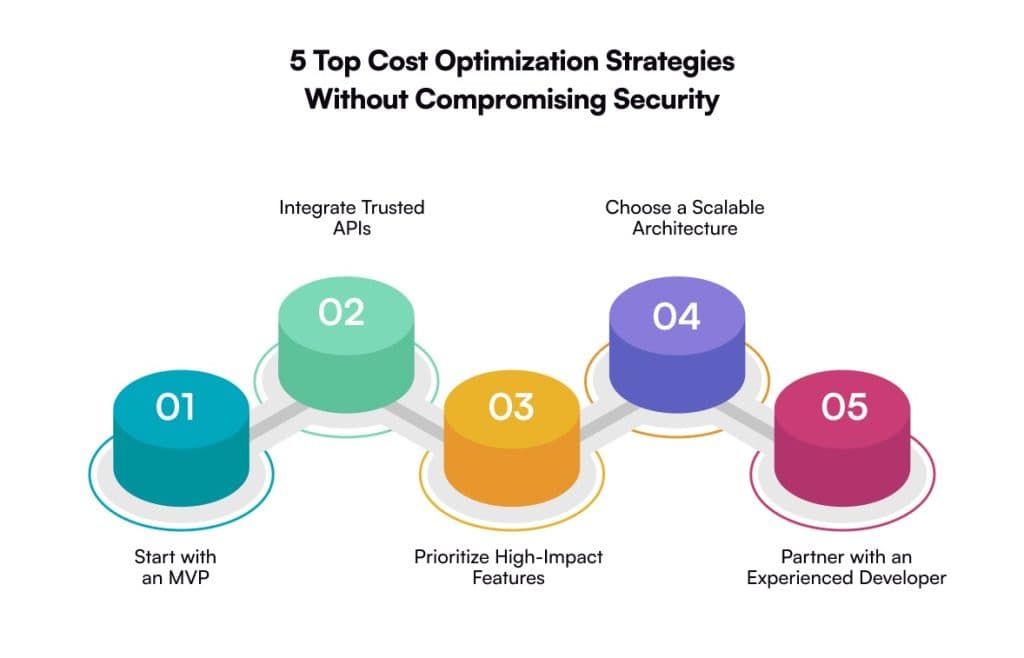
Managing the cost to develop a crypto payment gateway isn’t about cutting corners. It’s about making smart calls early, so you’re not forced into expensive fixes later.
The businesses that get this right don’t chase the cheapest build. They build for durability. For scale. For regulatory curveballs that inevitably show up. Do it strategically, and your gateway grows with you, not against you.
Here’s what actually helps control the cost of developing a crypto payment gateway without weakening your payment infrastructure.
- Start with an MVP
Don’t build everything at once. Seriously, you don’t need to.
A minimum viable product development can get you into the market faster and, more importantly, shows whether real transaction demand exists. Not assumed demand. Real usage.
This phased approach prevents heavy upfront spending and keeps the cost to develop a crypto payment gateway tied to actual business momentum. Build. Learn. Expand.
- Integrate Trusted APIs
Rebuilding the wheel sounds ambitious. Mostly, it’s expensive.
Reliable third-party APIs for KYC, exchange rates, and blockchain data shorten development cycles dramatically. Less engineering strain. Faster deployment. And when the integrations are trusted, security doesn’t take a hit. Which, frankly, is non-negotiable in payments.
- Prioritize High-Impact Features
Every feature feels important during planning. It isn’t.
Focus first on what drives revenue, speeds up transactions, and strengthens user trust. The rest can wait. Platforms that try to launch “fully loaded” often burn budget too early.
Smart prioritization keeps the crypto payment gateway development cost under control while still positioning your product as competitive from day one.
- Choose a Scalable Architecture
Growth sounds great, until your system can’t handle it.
Designing for scalability from the start allows your gateway to absorb rising transaction volumes without forcing a full rebuild later (which is painful and very expensive).
Yes, initial investment might tick up slightly. But long-term, it lowers the cost to develop a crypto payment gateway by avoiding disruptive migrations and downtime.
Future-you will be grateful for this decision.
- Partner with Experienced Fintech Developers
Expertise costs more upfront. Usually worth every bit.
Seasoned fintech developers understand compliance pressure, security frameworks, payment logic, and the details that inexperienced teams often overlook. Those oversights? They turn into costly architectural mistakes.
The right partner doesn’t just build your gateway. They streamline the entire lifecycle so your budget and growth plans stay protected.
Build vs Buy vs White-Label: Which is More Cost-Effective?
When businesses evaluate the crypto payment gateway development cost, one decision quietly shapes everything that follows: do you build it, buy it, or go white-label?
Looks simple on the surface. It isn’t.
Each path changes your investment, your level of control, and how well the platform holds up when transaction volume grows. Pick wrong, and costs don’t just rise; they compound over time.
This choice shouldn’t be driven by budget alone. Think bigger. Growth plans. Customization requirements. Regulatory exposure. How fast do you need to enter the market?
Get those clear first. The right direction usually becomes obvious.
- Build (Custom Development)
Building from scratch gives you full ownership. Total control over security layers, transaction logic, integrations, all of it shaped around your business model instead of someone else’s framework.
Yes, the upfront cryptocurrency payment gateway cost is higher. No surprise there. But custom platforms scale better and remove the burden of ongoing licensing fees that quietly drain margins.
For companies treating payments as a strategic asset, not just a backend function, this route often pays off long-term.
Estimated Cost: $120,000 – $300,000+
Best For: Fintech firms, enterprises, and high-growth businesses focused on control, differentiation, and stronger ROI.
- Buy (Ready-Made Solution)
Need speed? This is usually the fastest route.
Buying an existing gateway cuts development time dramatically and lowers the initial cost to build a crypto payment gateway. You skip the heavy engineering phase and move closer to launch.
But convenience has trade-offs.
Customization tends to be limited. Vendor dependency becomes real. Subscription or transaction fees follow you month after month. And as your product evolves, the platform may not keep up.
Estimated Cost: $20,000 – $70,000 (plus recurring fees)
Best For: Startups or businesses testing crypto payments without taking on major upfront risk.
- White-Label Solutions
White-label sits somewhere in the middle, not fully custom, not completely off-the-shelf.
You get proven infrastructure, faster deployment, and the ability to operate under your own brand. Customers see your identity, not a third-party platform, which matters more than many teams initially think.
The cost to develop a crypto payment gateway is lower than custom builds but higher than basic, ready-made tools because of branding flexibility and configuration.
For many growing companies, it’s a practical balance between speed and professionalism.
Estimated Cost: $40,000 – $100,000
Best For: Businesses that want customization and brand presence without waiting through a full development cycle.
A Quick Comparison:
| Approach | Upfront Cost | Customization | Time to Market | Long-Term Cost Impact |
| Build | Highest | Complete control | Longer | Lower over time |
| Buy | Lowest | Limited | Fastest | Can increase due to fees |
| White-Label | Moderate | Moderate–High | Fast | Balanced |
Why Partner with an Experienced Fintech Development Company
Building a payment system isn’t just another tech project anymore. It’s a business decision. A serious one. The kind that directly impacts customer trust, transaction stability, and whether your platform can scale without breaking under pressure.
When companies start evaluating the crypto payment gateway development cost, many focus on numbers first. Fair. But here’s what experienced leaders eventually realize: the real differentiator isn’t the budget. It’s the expertise shaping the architecture.
Because a smart development approach does more than launch a gateway. It helps you avoid hidden costs. Builds compliance into the system from day one. That’s where seasoned fintech teams, like Galaxy Weblinks, step in.
They don’t just react to problems post-launch. They see them coming. And quietly design around them. The result? Faster execution. Fewer operational surprises. Stronger protection for both revenue and reputation.
At the end of the day, the smartest investment isn’t just launching a crypto payment gateway. It’s launching one that’s ready for what comes next: higher volume, tighter regulations, bigger customer expectations.
If you’re planning the next move, bring experts in early. Align your tech with your growth plans. Think long term, even if the launch feels urgent.
FAQs
1. What is the cost to develop a crypto payment gateway in 2026?
The cost to develop a crypto payment gateway usually falls somewhere between $40,000 and $300,000+. Wide range, yes, but it depends on what you’re building. Feature depth. Security layers. Compliance readiness. Blockchain integrations. All of these push the number up or down.
2. What factors most influence crypto payment gateway development cost?
A few things drive the budget faster than others.
Advanced security frameworks. KYC and AML compliance. Multi-currency capability. Scalable architecture. And often overlooked the expertise of the development team itself. Businesses that plan for future scale typically spend more early, but avoid painful (and expensive) upgrades down the road.
3. How long does it take to develop a crypto payment gateway?
Most gateways take 3 to 12 months to build. Sometimes quicker, sometimes longer, depends on the complexity.
An MVP can launch relatively fast if the scope is tight. Enterprise platforms? They need more breathing room for security testing, deep integrations, and compliance checks. Rushing this phase usually creates bigger delays later, ironically.
4. Is it better to build a crypto payment gateway from scratch or use a white-label solution?
Custom development gives you full control, stronger flexibility, and better long-term cost efficiency, especially for high-growth companies that see payments as a competitive advantage.
White-label solutions, on the other hand, speed things up and reduce upfront investment. Great for fast market entry. Just know that customization limits may surface as your ecosystem expands.
5. Can startups afford the cost to develop a crypto payment gateway?
Yes. Many do, just not all at once.
Startups often begin with an MVP or API-first model to keep the crypto payment gateway development cost manageable. Build the core. Validate demand. Then scale gradually as transaction volume rises. It’s a smarter financial path.