

Founders don’t search “what is a marketplace.” They search for something: “How do I build a multi vendor marketplace platform that actually works?”
Because running a marketplace isn’t the same as launching a normal eCommerce store. Not even close. Suddenly, you’re dealing with vendors, commissions, onboarding flows, disputes, catalog chaos.
The market, though, is massive. According to Statista, nearly two-thirds of global eCommerce sales now happen through online marketplaces. Think Amazon. Alibaba. Etsy. They didn’t scale because they stocked more products. They scaled because they built systems where vendors bring the inventory.
And, that’s the power of a multi vendor marketplace platform.
But building one is not just about launching a multi vendor eCommerce website and letting sellers sign up. Infrastructure matters. Vendor dashboards. Payment splits. Product moderation. Search. Analytics. And so on.
So this guide focuses on the things founders actually care about. The questions people keep Googling but rarely get straight answers to. How do you structure a multi vendor marketplace platform from day one? What features make vendors join and stay?
What Is a Multi-Vendor Marketplace Platform?
A multi vendor eCommerce platform is basically a digital marketplace where many sellers list and sell products on one single website. Not one store. But many stores. All inside the same system. Customers browse products from different vendors, compare prices, add items to one cart, and check out in one go. Simple for buyers.
The platform manages vendor registration, product uploads, order flows, commissions, payments, and ratings. Everything runs through the same engine. That’s what makes a multi vendor eCommerce platform very different from a regular eCommerce website.
And the business model is interesting. Instead of buying inventory yourself, vendors bring the products. They manage stock. They fulfil orders. The platform owner focuses on infrastructure, vendor dashboards, search systems, payment distribution, and moderation tools.

How a Multi-Vendor Marketplace Works
A multi vendor marketplace platform looks pretty simple from the outside. But behind the screen, things move in a sequence.
Vendors joining, products getting listed, orders routing to the right seller, and payments splitting automatically. A lot is happening quietly. That’s the backbone of any multi vendor marketplace development project.
- Vendor Onboarding
Everything starts here. Sellers first need a way to enter the multi vendor marketplace platform. They sign up, add store details, and sometimes upload verification docs. Admin reviews it. Approves. Now the vendor finally gets access to their dashboard.
- Product Listing
Once inside, vendors start adding products. Titles. Images. Prices. Stock numbers. Maybe variants too. The multi vendor marketplace platform then organizes everything into categories so buyers can actually find things. Search matters here.
- Customer Purchase
Now comes the part users see. Customers browse the marketplace, jump between products, and compare sellers. Maybe they add items from different vendors into the same cart. And yes, checkout still happens in one go. That’s the beauty of a multi vendor marketplace platform.
- Payment Processing
After checkout, the payment system takes over. The multi vendor marketplace platform collects the total payment first. Then it splits the amount automatically. Vendor gets their share. The platform keeps its commission. Simple concept, technically messy sometimes.
- Order Fulfillment
Then the order moves to the vendor. They pack the product. Ship it. Update the order status inside the multi vendor marketplace platform. Customers track delivery while the platform monitors everything in the background. When this part runs smoothly, the marketplace feels reliable.
Types of Multi-Vendor Marketplaces
During eCommerce marketplace development, choosing the right type matters because the features, workflows, and user experience change depending on the type of marketplace being built.
- Product Marketplace
This is the model most people picture first. Vendors list physical products. Customers browse, compare, buy. One seller offers electronics, another sells clothing, and someone else lists niche items you didn’t even plan for. That’s how a multi vendor eCommerce platform quickly builds a huge catalog.
Amazon works this way. Thousands of sellers, millions of listings. During eCommerce marketplace development, product marketplaces focus heavily on search, product discovery, and checkout flow. Because if customers can’t find things fast, they leave.
- Service Marketplace
Here, the marketplace isn’t selling products. It’s selling expertise. Vendors list services, development, design, consulting, writing, and marketing. You get the idea. Customers browse profiles, compare experiences, and hire the right person.
Platforms like Upwork run on this model. A multi vendor eCommerce platform built for services needs slightly different tools. Profiles matter more. Reviews matter a lot. Sometimes, messaging or project management tools, too.
- Rental Marketplace
Now things shift again. Nothing is permanently sold here. Vendors rent out assets instead, such as homes, cars, equipment, and sometimes even office spaces. Customers book them for a certain period. Then return them. Airbnb is the obvious example.
A multi vendor eCommerce platform for rentals needs booking calendars, availability controls, and scheduling systems. Timing becomes everything. So during eCommerce marketplace development, the platform focuses on managing dates, availability, and reservations without double bookings.
- Hybrid Marketplace
Some platforms don’t stick to one model. They mix things. Products, services, maybe rentals too. A hybrid multi vendor eCommerce platform allows vendors to choose how they want to sell. Physical goods today, services tomorrow, rentals later.
The system supports all of it. Businesses exploring eCommerce marketplace development sometimes choose this model because it gives flexibility. The marketplace can expand into new categories without rebuilding the whole platform again. Messy maybe, but powerful when done right.
Essential Features of a Multi-Vendor Marketplace
A multi vendor eCommerce platform only works when everyone inside the ecosystem can do their job easily. Buyers should shop without confusion. Vendors should manage their stores without calling support every hour. Admins need visibility over everything.
Here is the list of top must-have features to include in your multi-vendor marketplace:
Customer Features
- Product Search and Filters: Customers don’t scroll endlessly. They search. Then filter. Price, category, ratings, maybe brand too. Good search keeps large marketplaces usable.
- Reviews and Ratings: People trust other buyers more than product descriptions. Ratings and reviews help customers judge sellers before placing an order.
- Wishlist and Cart: Not every visit ends with a purchase. Wishlists let customers save products. The cart lets them buy items from different vendors in one checkout.
- Order Tracking: Once payment is done, the first question appears, where’s my order? Tracking shows shipping progress and delivery updates directly in the platform.
Vendor Features
- Vendor Dashboard: This is where sellers spend most of their time. A dashboard showing orders, revenue, products, and store activity in one place.
- Inventory Management: Vendors must track stock levels. Inventory tools update availability so products don’t get oversold.
- Product Listing Tools: Sellers need simple ways to add products. Upload images, write descriptions, set prices. Quick and easy.
- Order Management: Orders come in. Vendors process them, update shipping details, and manage cancellations or returns when needed.
- Sales Analytics: Numbers matter. Vendors see which products sell well, which don’t, and adjust their strategy.
Admin Features
- Vendor Approval System: Admins review seller registrations before allowing them to list products. Helps maintain quality across the multi vendor eCommerce platform.
- Commission Management: Marketplace owners earn through commissions. This system sets and manages how much the platform takes from each sale.
- Payment Distribution: Customers pay once. The system then splits the payment between vendors and the platform automatically.
- Dispute Management: Sometimes things go wrong. Wrong product, delayed shipping, and refunds. Admin tools help resolve disputes quickly.
- Platform Analytics: Admins need the big picture. Traffic, vendor performance, and revenue trends are all visible through marketplace analytics dashboards.
Step-by-Step Process to Build a Multi-Vendor Marketplace
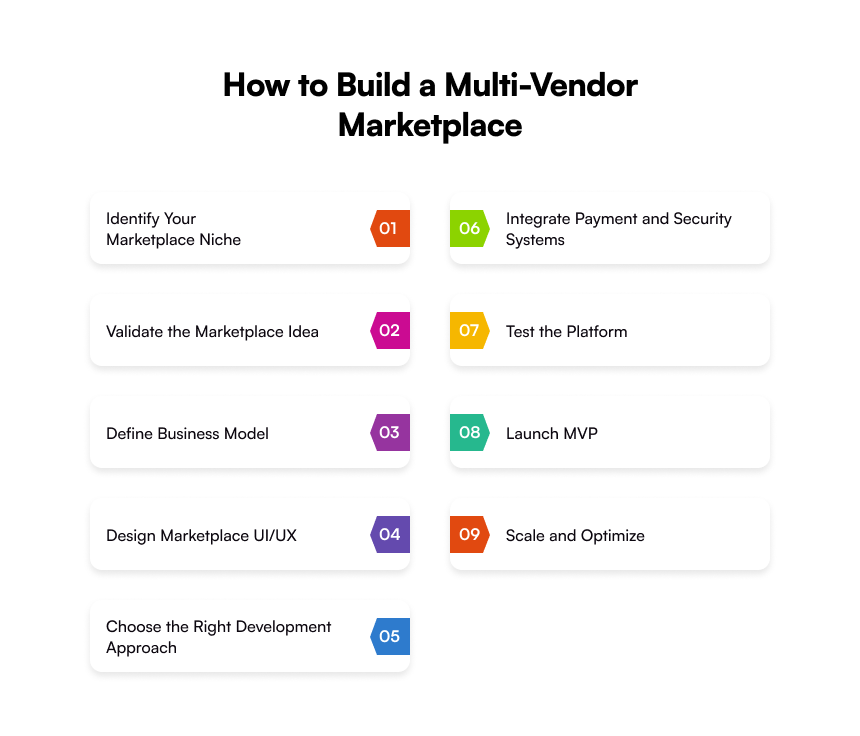
- Identify Your Marketplace Niche
The first step in multi vendor marketplace development is identifying the industry niche you want your platform to serve. It could be fashion, electronics, handmade goods, or even niche B2B products. Once the niche is clear, it becomes easier to shape your multi vendor eCommerce platform around the needs of that specific market.
- Validate the Marketplace Idea
Before you build a multi vendor marketplace, it’s important to validate the idea through market research and competitor analysis. Understand whether customers are actively searching for such a platform and whether vendors are willing to join and sell through it.
- Define Business Model
After validating the idea, define how your multi vendor marketplace platform will generate revenue. Some marketplaces charge commissions on each sale, while others rely on vendor subscriptions, listing fees, or featured product promotions.
- Design Marketplace UX/UI
Creating a smooth UI/UX design is crucial for any multi vendor eCommerce website. The platform should make it easy for customers to browse products and for vendors to manage listings, inventory, and orders without confusion.
- Choose the Right Development Approach
During eCommerce marketplace development, businesses must decide whether to build a custom solution, use an open-source platform, or adopt a SaaS-based marketplace solution, depending on scalability and budget.
- Integrate Payment and Security Systems
A reliable payment system is essential when you build a multi vendor marketplace. The platform should securely process transactions and distribute vendor payouts while protecting customer payment data.
- Test the Platform
Before launching the multi vendor eCommerce platform, thorough testing helps identify performance issues, security vulnerabilities, or usability problems that could affect the marketplace experience.
- Launch MVP
Most successful multi vendor marketplace development projects begin with an MVP development of the platform. This allows businesses to launch faster, gather user feedback, and improve the marketplace based on real usage.
- Scale and Optimize
Once the multi vendor marketplace platform gains traction, businesses can introduce advanced features, improve infrastructure, and expand the multi vendor eCommerce website to support more vendors and customers.
Technology Stack for Multi-Vendor Marketplace Development
Frontend
React.js, Vue.js, Angular
Backend
Node.js, Laravel, Django, Spring Boot
Database
PostgreSQL, MySQL, MongoDB
Cloud Infrastructure
AWS, Microsoft Azure, Google Cloud Platform
Payment Gateways
Stripe, PayPal, Razorpay
Search & Indexing
Elasticsearch, Algolia
Authentication & Security
OAuth, JWT, Firebase Authentication
DevOps & Deployment
Docker, Kubernetes, Jenkins, GitHub Actions
How Much Does It Cost to Build a Multi-Vendor Marketplace?
“How much is it going to cost to develop a multi vendor marketplace like Amazon or Etsy?”
This is usually the first question founders ask when considering building a multi-vendor marketplace. And fair enough. Budgets matter. But here’s the honest thing: the multi vendor platform development cost varies a lot.
It depends on features. Integrations. Platform architecture. The level of customization your multi vendor marketplace development really needs. Most businesses start small, considered to be a smart move.
A multi vendor eCommerce platform MVP usually includes the essential features. For instance, vendor onboarding. Product listings. Payments. Order management. Nothing fancy, but enough to get vendors on board and transactions moving.
The goal here isn’t perfection. It’s validation.
- Will the marketplace idea work?
- Will vendors join?
- Will buyers actually purchase?
That’s what the MVP answers. Now the platform isn’t just functioning. It’s managing an ecosystem. That’s when the multi vendor marketplace platform becomes a real operational system.
At this level, development usually moves into the $100,000 to $200,000 range. Not surprising, because the platform now supports larger vendor communities, higher traffic, and more complex workflows.
Then comes the enterprise layer. This is where things get serious. Large scale multi vendor marketplace development often requires custom infrastructure. Automation tools. Advanced vendor management. Deep analytics, etc.
Below is an estimated cost for building a multi vendor marketplace:
| Marketplace Phase | What You’ll Get | Estimated Cost |
| MVP Multi Vendor Marketplace | Vendor onboarding Simple product listings, Payments that actually workOrders get processed | $40,000 – $80,000 |
| Mid-Scale Multi Vendor Marketplace | Better searchVendor dashboardsAnalytics shows what’s selling | $100,000 – $200,000 |
| Enterprise Multi Vendor Marketplace | Custom architectureAutomation payoutsVendor workflowsOrder flows. Deep integrations with CRM, ERP, and logistics systems. | $250,000+ |
Key Benefits of Building a Multi-Vendor Marketplace
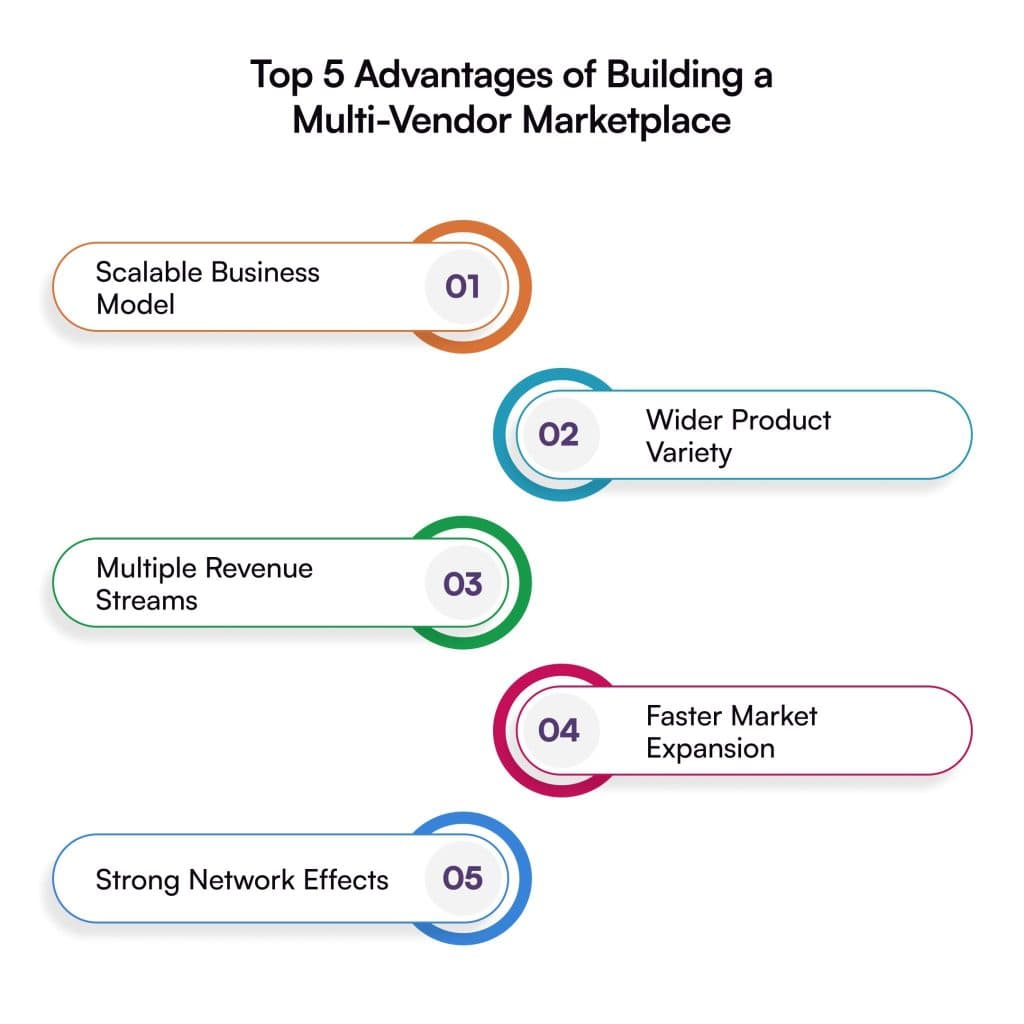
A multi vendor eCommerce platform changes how online businesses grow. Not slowly. Not the usual way. In a traditional store, growth means more inventory, more suppliers, more storage, and more complexity.
That’s why businesses investing in eCommerce marketplace development think less about stock and more about ecosystems.
- Scalable Business Model
Scaling a multi vendor eCommerce platform doesn’t look like normal eCommerce growth. You’re not adding warehouses or negotiating with suppliers every month. Vendors handle their own stock. They manage pricing. They fulfil orders. The platform focuses on the backbone, vendor dashboards, product catalogs, payment routing, and search systems.
- Wider Product Variety
People don’t visit marketplaces for just one product. They come for options. Lots of them. A multi vendor eCommerce platform makes that possible because each seller uploads their own catalog. One vendor sells electronics. Another sells accessories. Someone else lists niche products you didn’t even plan for. Suddenly, the marketplace feels big.
- Multiple Revenue Streams
Revenue inside a multi vendor eCommerce platform rarely comes from product margins. It comes from the system itself. Platforms earn through vendor commissions, subscription plans, listing fees, and sometimes promoted product placements, too. Some marketplaces charge sellers for better visibility or premium storefront features.
- Faster Market Expansion
Expanding a normal eCommerce store into new categories can take months. New suppliers. New logistics. Inventory risk. But a multi vendor eCommerce platform expands differently. Vendors bring the products with them. When new sellers join, new product categories appear almost instantly. The marketplace grows sideways across niches & industries.
- Strong Network Effects
And then something interesting starts happening. Vendors join because the marketplace has buyers. Buyers come because the marketplace has products. More products attract even more buyers, which attracts more vendors again. The cycle repeats. Slowly at first. Then faster. A multi vendor eCommerce platform grows through participation, not just marketing.
Challenges in Building a Multi Vendor Marketplace Platform
Launching a multi vendor eCommerce platform sounds exciting at first. Big idea. Big marketplace vision. Vendors everywhere. Buyers are flowing in. However, it comes with common challenges.
Some of them are listed below:
- Vendor Acquisition in the Early Stage
This is usually the first wall founders hit.
At the start, sellers hesitate. A new multi vendor eCommerce marketplace has little traffic. Limited customers. No proven demand yet. Vendors think, ” Why should I list here?
Without sellers, product variety stays small. And without products, buyers don’t come. So the marketplace sits in this strange early loop. Convincing the first group of vendors takes effort. Outreach. incentives. sometimes reduced commissions. Sometimes, there are personal onboarding calls.
- Balancing Supply and Demand
Marketplaces run on balance.
Too many vendors, but no buyers, and eventually, sellers lose interest. They stop updating listings. Some leave the multi vendor marketplace platform entirely.
Too many buyers but very few sellers, and customers can’t find what they want, resulting in a poor experience. Thus, both sides need to grow together. Slowly. Carefully. That balance is one of the hardest parts of scaling a multi vendor eCommerce platform.
- Building Trust Between Buyers and Sellers
Trust is everything in a marketplace.
Buyers usually don’t know the vendors personally. They’re buying from strangers on a multi vendor eCommerce website. Which means hesitation is normal.
That’s why features like reviews, ratings, vendor verification, and order transparency become critical during eCommerce marketplace development. They reduce uncertainty. They show buyers that the platform is safe.
- Managing Payments and Vendor Payouts
Payments in marketplaces are rarely simple.
A customer pays the platform. The platform takes its commission. The remaining amount goes to the vendor. Sometimes after delivery. Sometimes, after a return window closes. Now add multiple vendors. Different payment methods. Refunds. Taxes. Compliance rules.
Suddenly, the payment system in a multi vendor marketplace platform becomes a financial workflow, not just a checkout button. Handling commissions, automated payouts, and secure payment processing is a core challenge in multi vendor marketplace development.
- Platform Scalability
At first, traffic is small. Everything feels smooth.
But as the marketplace grows, more vendors join. Product catalogs expand. Thousands of users browse simultaneously. Suddenly, the multi vendor marketplace platform needs to handle heavy traffic, large databases, and constant transactions.
If the architecture isn’t built for scale, performance drops. Pages load slowly. Search becomes inefficient. Users leave. Scalable infrastructure is not optional in long-term multi vendor marketplace development.
Final Thoughts
Marketplaces changed eCommerce.
Businesses don’t always hold inventory anymore. Instead, they build ecosystems. Vendors bring products. Customers bring demand. The multi vendor marketplace platform sits in the middle and connects everything.
However, launching a multi vendor eCommerce website isn’t just putting products online and waiting for traffic. That rarely works. Marketplaces need structure. Planning. A lot of thinking before the first line of code even gets written. And then comes technology.
The tech stack has to support scale. Not just today’s traffic but tomorrow’s growth. Vendors joining. Product catalogs expanding. Thousands of transactions are happening at the same time on the multi vendor eCommerce platform.
A lot is happening under the hood during ecommerce marketplace development. Which is why the development partner you choose matters more than people think.
Experienced teams understand the moving parts. They know where marketplaces usually break. And they design systems that grow without collapsing later. That’s where Galaxy Weblinks steps in.
With years of experience building custom digital platforms and scalable ecommerce ecosystems, our experts help businesses design and develop marketplaces that actually work in the real world.
FAQs
Q. What is a multi vendor marketplace platform?
A. A multi vendor marketplace platform is an online system where multiple sellers list products or services while customers purchase them through a single website.
Q. How long does it take to build a multi vendor marketplace?
A. Typically between 3 and 9 months, depending on platform complexity, features, and the scale of multi vendor marketplace development.
Q. What features are required in a multi vendor eCommerce platform?
A. Essential features include vendor onboarding, product listings, payment distribution, order management, customer reviews, and admin controls.
Q. Is a multi vendor eCommerce website profitable?
A. Yes. A multi vendor eCommerce website generates revenue through commissions, vendor subscriptions, listing fees, and sponsored product placements.
Q. What is the difference between eCommerce and marketplace platforms?
A. Traditional eCommerce stores sell products from a single vendor. A multi vendor eCommerce platform allows multiple vendors to sell through one centralized marketplace.