

Organizations today produce more waste than ever. Industrial scrap. Old devices. Packaging piles up. Managing all this is not just an operations task anymore. It’s a business risk. And also a sustainability call.
The United Nations reports that global e-waste reached almost 62 million tonnes in a year. Expected to hit 82 million tonnes by 2030. That’s huge. And honestly, most IT teams aren’t fully ready for this scale.
Still, many enterprises track waste through spreadsheets. Email chains. Random vendor follow-ups. Things work until they don’t. Visibility drops. Compliance stress increases. Costs quietly grow.
This is why waste management software is becoming a smart move. Not just a tech upgrade. A strategic shift. It centralizes tracking. Automates disposal workflows. Keeps compliance sorted. Supports sustainability goals without slowing operations.
In this guide, we’ll break down how waste management software supports sustainable IT operations. What features actually matter? And how enterprises can build systems that scale without chaos.
What is Waste Management Software?
Waste management software is a system that helps organizations track and control waste. From the moment it’s created to the moment it’s disposed of. No blind spots. No guesswork.
It replaces messy spreadsheets. Endless email trails. Random vendor coordination. Everything moves into one structured platform. You see what’s happening. When. And why.
The software automates disposal workflows. Stores compliance records. Tracks recycling, destruction, and movement of waste. Makes audits less scary. Reporting becomes faster. Teams waste less time.
For IT operations, this matters more. Retired devices. Data-bearing assets. Electronic waste. All handled with traceability. Leadership gets real insights. Not assumptions.
In simple terms, waste management software turns waste into a managed process. Predictable. Measurable. Easier to scale. And honestly, easier to trust.
Why Enterprises Need Waste Management Software Development
If your organization generates waste across multiple locations or operations, manual waste management processes quickly become inefficient.
The risks grow. Compliance complexity increases. Operational visibility decreases. This is why waste management software development has become a priority for modern enterprises.
Here is a closer look at the biggest reasons:
- Centralized Waste Visibility
Enterprises deal with waste across locations, teams, and vendors. Things get messy fast. A centralized platform brings clarity. Real-time tracking. Unified dashboards. No more scattered data. Leadership finally sees the full waste picture. Decisions become faster. Risks easier to control.
- Stronger Compliance and Audit Readiness
Regulations keep changing. Documentation needs to stay perfect. Waste software automates compliance workflows. Maintains disposal records. Generates audit trails without manual effort. Teams stop scrambling before inspections. Legal risks are reduced. Confidence improves. Feels like control, not chaos.
- Better IT Asset and E-Waste Management
Retired laptops. Old servers. Broken hardware. Enterprises generate e-waste constantly. Software tracks every device lifecycle. Ensures verified data destruction. Supports responsible recycling. IT teams gain accountability. Sustainability teams get real metrics. No asset disappears silently anymore.
- Operational Efficiency and Cost Optimization
Manual waste tracking drains time and resources. Automation changes that. Disposal workflows run smoother. Vendor coordination becomes structured. Reporting takes minutes, not days. Enterprises cut hidden costs. Teams focus on strategy instead of repetitive follow-ups. Efficiency becomes measurable, not assumed.
- Improved Vendor and Chain-of-Custody Control
Waste handling involves multiple third parties. Without visibility, accountability drops. Software maintains a chain-of-custody record. Tracks vendor performance. Flags delays or risks early. Enterprises gain control over external dependencies. Trust becomes data-driven. Not just contractual.
- Sustainability and ESG Performance Tracking
Sustainability is no longer optional. Stakeholders demand proof. Waste management platforms track recycling rates, emissions impact, and disposal outcomes. ESG reporting becomes structured. Transparent. Enterprises align operations with sustainability goals without adding manual reporting burdens.
- Scalable Waste Management Infrastructure
As enterprises grow, waste complexity grows too. Manual systems break under scale. Software provides structured workflows that expand easily. Multi-location tracking. Automated reporting. Future-ready architecture. Organizations build long-term resilience instead of reactive fixes. Growth feels manageable. Not overwhelming.
Core Features to Consider in Waste Management Software Development
Before investing in waste management software, enterprises need clarity. What actually creates value. Not every feature matters. Some just look good on paper.
The right capabilities improve visibility. Strengthen compliance. Make sustainability measurable. Therefore, choose strategically here. Because this decision decides everything. Either you build a long-term operational asset. Or end up with just another tool no one fully uses.
| Feature | What It Does | Why It Matters for Enterprises |
| Waste Tracking & Lifecycle Management | Tracks waste from generation to disposal or recycling. Maintains complete visibility across locations and departments. | Prevents loss of accountability. Helps enterprises manage waste in a structured, traceable way. |
| Compliance & Regulatory Reporting | Automates documentation, reporting, and audit trail creation aligned with local and global regulations. | Reduces legal risks. Ensures audit readiness without manual effort or last-minute stress. |
| E-Waste & IT Asset Disposal Management | Monitors retired IT assets, data destruction status, and certified recycling processes. | Protects sensitive data. Supports sustainable and compliant IT operations. |
| Vendor & Chain-of-Custody Management | Tracks third-party waste handlers, transport logs, and disposal confirmations. | Builds transparency and accountability in vendor-driven waste workflows. |
| Workflow Automation | Automates approvals, pickups, disposal scheduling, and reporting processes. | Improves operational efficiency. Reduces dependency on manual coordination. |
| Real-Time Analytics & Dashboards | Provides actionable insights into waste volume, disposal methods, and sustainability metrics. | Enables data-driven decision-making and cost optimization strategies. |
| Sustainability & ESG Reporting | Measures recycling rates, environmental impact, and sustainability KPIs. | Helps enterprises meet ESG goals and stakeholder expectations. |
| Multi-Location & Scalability Support | Manages waste operations across multiple facilities with centralized control. | Supports enterprise growth without increasing operational complexity. |
| Integration Capabilities | Integrates with ERP, asset management, and compliance systems. | Ensures seamless data flow and avoids siloed operations. |
| Security & Access Control | Provides role-based access, secure data storage, and audit logs. | Protects sensitive operational and compliance data from breaches or misuse. |
How Waste Management Software Ensures Regulatory Compliance
Compliance is a big reason enterprises invest here. Not optional anymore. Regulations are strict. And honestly, getting it wrong is expensive. Waste management software helps teams stay aligned. Without constant firefighting.
- EPR Documentation & Filing
Handling EPR manually? Gets complicated fast. Different waste types. Different regions. The software records waste categories, material details, and disposal methods. Then auto-generates EPR documentation. No manual chasing. For global teams, this saves serious time. And avoids compliance gaps.
- Real-Time Tracking & Reporting
Regulators want traceability. End-to-end. No missing links. The platform tracks waste from origin to final disposal. Every movement gets logged. Chain-of-custody stays intact. Reports are always ready. Audits feel less stressful. Because data is already there.
- Vendor Management
Not all vendors stay compliant. And that’s risky. The software tracks vendor certifications. Flags expired or are invalid. Stops teams from working with the wrong partners. Enterprises get better control. Less dependency on blind trust. More on verified data.
- Data Destruction Security
E-waste isn’t just waste. It’s a data risk. Regulations demand proof of destruction. The platform integrates wipe workflows. Generates certificates automatically. Every device is accounted for. Nothing slips. IT teams stay protected. So does the business.
- Automated Alerts & Inspections
Deadlines get missed. Happens more than you think. The system sends alerts for filings, renewals, and pending actions. Keeps teams on track. Issues get fixed early. Not at the last minute. Compliance becomes proactive. Not reactive anymore.
How Much Does It Cost to Build a Waste Management Software
Cost is usually the first question. And fair enough. Because this isn’t a small investment.
There’s no fixed number here. It depends on features. Complexity. Integrations. Compliance needs. Even the regions you operate in. A basic system costs less. But enterprise-grade platforms? They go higher. Fast.
Still, to give you a realistic idea, here’s what most businesses typically spend:
| Development Level | Estimated Cost |
| Basic Application (limited features, simple tracking) | $30,000 – $100,000 |
| Medium Complexity (automation, reporting, integrations) | $100,000 – $150,000 |
| Advanced Enterprise Solution (AI, analytics, multi-location, compliance-heavy) | $150,000 – $300,000 |
Steps to Build a Waste Management Software
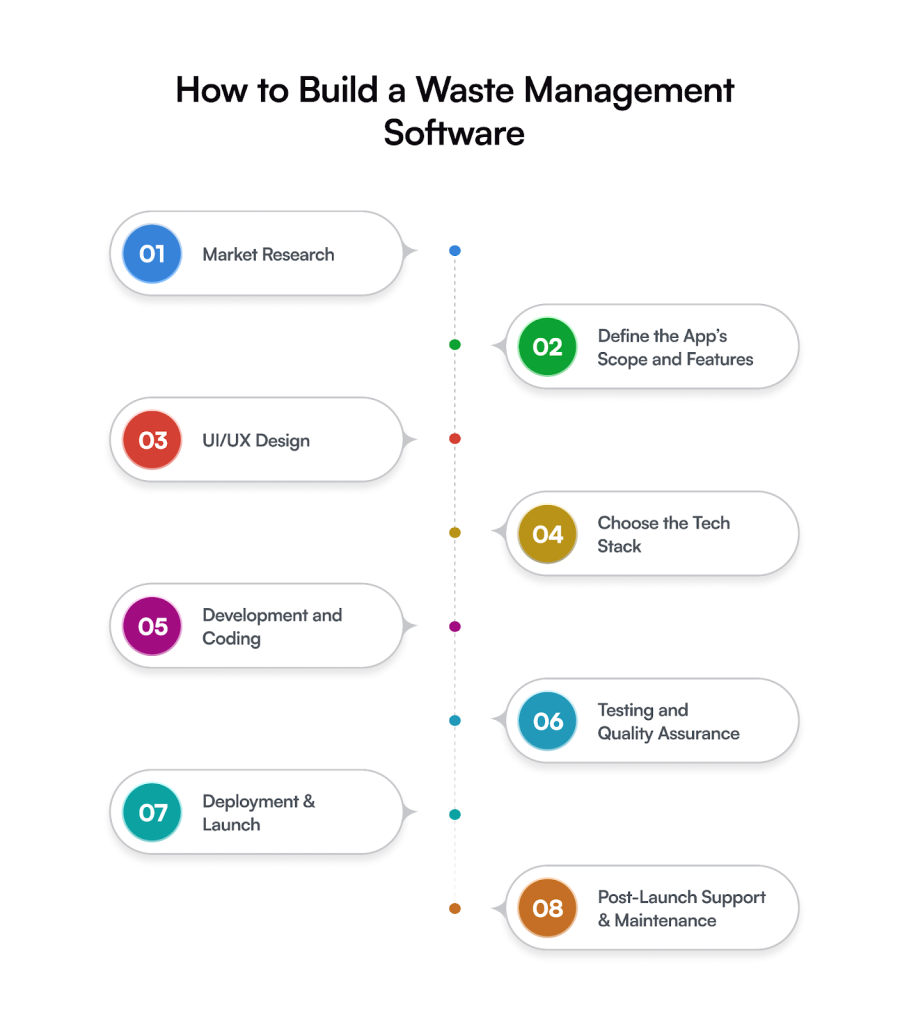
Building a reliable waste management software takes more than just coding. You need clarity. Right priorities. And a structured approach. Miss one step, and things get messy later.
Here’s how enterprises usually get it right:
- Market Research
Start with understanding the industry. Waste types. Regulations. Competitors. Identify gaps in existing solutions. This step shapes the direction of your waste management software development. Skip this, and you risk building something no one actually needs.
- Define the App’s Scope and Features
Be clear on what the software should do. Not everything needs to be built at once. Prioritize core features. Align them with business goals. A focused scope makes it easier to build waste management software that actually delivers value.
- UI/UX Design
Design is not just about looks. It’s about usability. Dashboards should feel simple. Workflows should feel natural. If users struggle, adoption drops. A clean UI/UX design makes complex waste operations easier to manage. Almost effortless.
- Choose the Tech Stack
Pick technologies that support scalability and integration. Think long-term. Not just quick builds. The right tech stack ensures your waste management software development stays flexible. And can handle growing data, users, and compliance needs.
Not sure which technology will fit best for your use case? Explore our Technology Consultation services, and clear your doubts.
- Development and Coding
This is where everything comes together. Features get built. Workflows get defined. Keep the code modular. Easy to scale. Easy to update. A solid development phase ensures the system performs well under real operational pressure.
- Testing and Quality Assurance
Bugs happen. But they shouldn’t reach users. Test everything. Workflows. Integrations. Edge cases. Quality assurance ensures the system runs smoothly. And meets compliance expectations. Because failures here can cost more than just time.
- Deployment & Launch
Once ready, deploy carefully. Monitor performance from day one. Ensure integrations work in real environments. A smooth launch builds confidence across teams. And sets the tone for how the platform will be adopted internally.
- Post-Launch Support & Maintenance
The work doesn’t stop after launch. Systems need updates. Regulations change. User needs evolve. Continuous support keeps the platform relevant. And ensures your decision to build waste management software delivers long-term operational value.
Waste Management Software Development by Industry
Different industries mean different waste problems. Same need for control and compliance. A one-size solution doesn’t really work here. Systems need to adapt. Based on how each industry operates.
For instance,
- IT & Tech
Tech companies deal with constant device turnover. Laptops. Servers. Storage units. E-waste builds up fast. A structured system tracks every asset. Ensures secure disposal. Verifies data destruction. Keeps global compliance in check. No loose ends.
- Manufacturing & Electronics
Multiple waste streams. Production scrap. Packaging. Electronic components. Things get complex quickly. Regulations like EPR demand detailed tracking. Software helps monitor the full lifecycle. Improves recycling efforts. And keeps compliance aligned without slowing operations.
- BFSI
Highly regulated. No room for error in the finance industry. Especially with data. When disposing of IT assets, traceability is critical. Waste management software creates secure workflows. Documents every step. Ensures data destruction proof is always available. Audits become manageable.
- Government
Operations spread across departments. Locations. Teams. Waste handling needs transparency. And accountability. Centralized systems bring everything together. Standardize processes. Maintain clear records. Helps agencies stay compliant with procurement and disposal regulations.
- Healthcare
Waste in the healthcare sector isn’t just volume. It’s sensitive. Medical waste. Hazardous materials. Devices with patient data. Risks are high. Software ensures proper segregation. Certified disposal. Data protection compliance. Everything tracked. Everything documented.
Conclusion
Waste management isn’t just an operational task anymore. It touches compliance. Data security. Sustainability goals. Everything connects. And honestly, manual processes just don’t keep up now.
This is where waste management software development makes the shift. It brings structure. Centralized tracking. Automated workflows. Compliance stays in check. Reporting becomes easier. Operations feel more controlled. Less reactive.
But building it right isn’t only about tech. You need to understand waste lifecycles. Regulations. Real operational challenges. Otherwise, the system just sits there. Underused.
At Galaxy Weblinks, we help enterprises build systems that actually work in real environments. From asset tracking and compliance automation to sustainability dashboards and vendor management. Everything designed to fit your operations. Not the other way around.
FAQs
Q. What is waste management software?
It is a digital platform that helps organizations track, manage, and automate waste disposal and recycling processes across operations.
Q. Why do enterprises need waste management software?
Manual processes create compliance risks and operational inefficiencies. Software improves tracking, reporting, and sustainability management.
Q. Which regulations does it support?
Waste management systems support frameworks such as WEEE, EPR, RoHS, GDPR, HIPAA, and national environmental regulations, depending on the region.
Q. How does it improve compliance?
The platform maintains traceable disposal records, generates regulatory reports, and tracks vendor certifications automatically.
Q. Can organizations recover value from waste materials?
Yes. Many systems track recyclable materials and refurbished equipment that can generate resale value.
Q. What does waste management software cost?
Small systems may start at a few hundred dollars per month, while enterprise platforms range between $2,000 and $15,000+, depending on scale.
Q. How does it support sustainability reporting?
It tracks recycling metrics, landfill diversion rates, and environmental impact data that can be exported into ESG reporting frameworks.